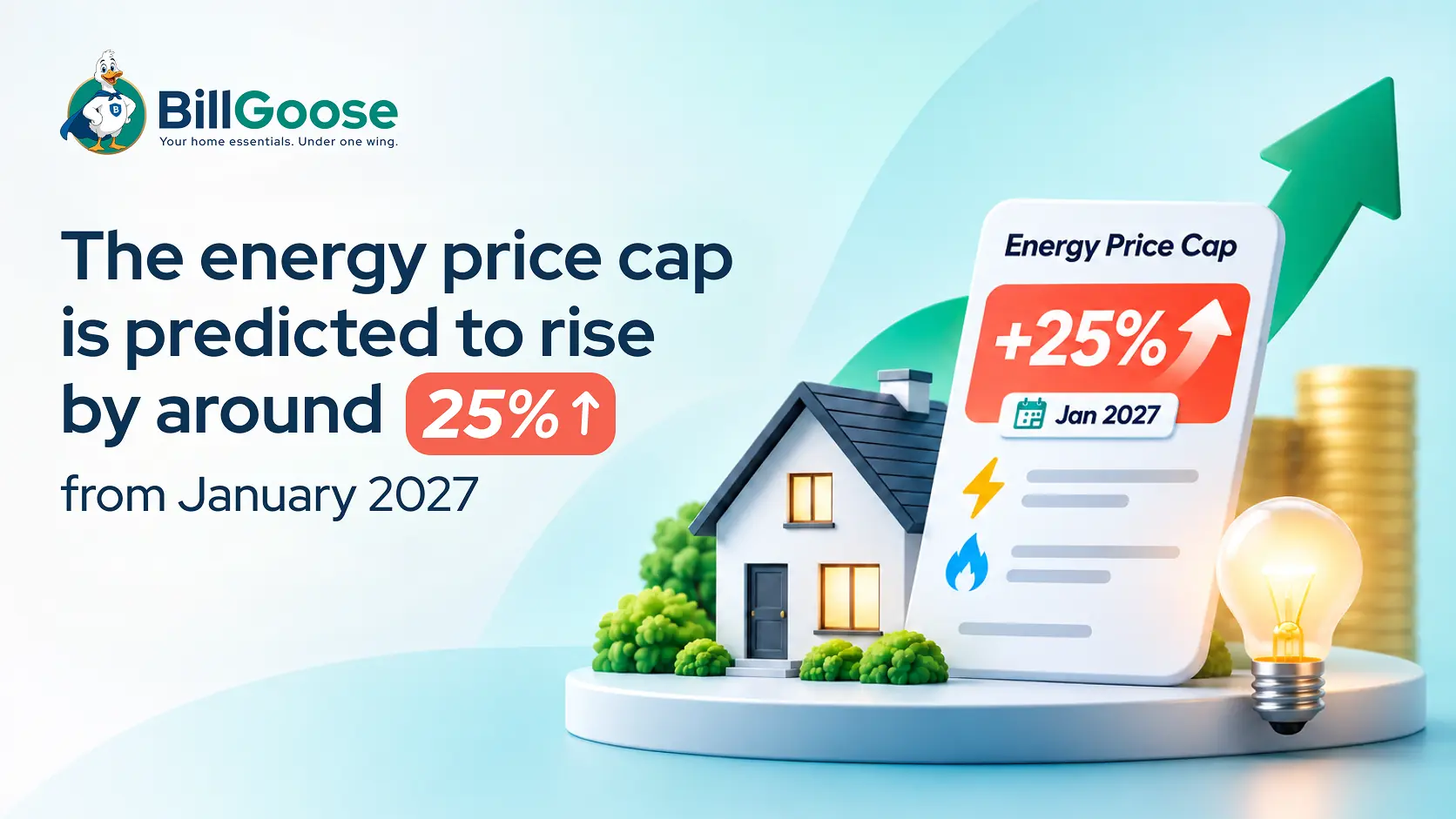
The average annual bill is predicted to rise from £1,723 to £2,153.
The energy price cap rose by 4% for the period covering 1 October to 31 December 2026. This included the temporary VAT removal from electricity.
The price cap refers to the default tariff applied when a customer is not on a fixed-rate tariff. It sets a maximum rate per unit and standing charge that can be billed to customers for their energy use.
At a glance
How the predicted rise compares
Price cap now
October–December 2026
Predicted Jan price cap
25% predicted increase
Comparable fixed tariff
Available via BillGoose*
 £1,947/yr
Potential annual difference
£206
between the predicted cap and comparable fix
This is a simple comparison, not a personalised quote. Your actual bill depends on your usage, region, meter and payment method.
* Comparable fixed tariff is based on the three lowest-priced fixed tariffs available through BillGoose on 18 November 2026. Figures are averages and rounded for clarity.
1. Who could be affected?
Currently, 35% (11 million) of households are on fixed tariffs and are therefore unaffected by the price rise. This means 65% (20 million) of households will be impacted by the January 2027 cap rise.
35%
11 million households
Are on fixed tariffs and are therefore unaffected by the price rise.
65%
20 million households
Will be impacted by the January 2027 cap rise.
+£430
a year
The predicted increase for an average household.
2. What it means for a typical home
For the average household using both electricity and gas on the price cap, the October increase amounted to a rise of around £5 a month with the overall bill for an average household (3 bedrooms with 2/3 occupants) paying by Direct Debit for electricity and gas going to £1,723 per year. With a predicted 25% increase in the price cap in January this rises by an average of £430 a year to £2,153.
So, an average house paying £144 per month (£1,723 a year) on the October price cap (most people not on a fix) will go to £179 per month (£2,153 a year).
“With a predicted 25% increase in the price cap in January this rises by an average of £430 a year to £2,153.”
3. Will my Direct Debit rise straight away?
Remember, many of us are on Direct Debit and the January increase doesn't necessarily mean your Direct Debit payments will increase right away. The amount you're paying will depend on how much energy you use and what your current balance is with your current supplier. Every house is different based on the energy used at that property. The price you pay for each unit of energy you consume will go up if you are not on a fix and this can be reflected in your monthly Direct Debit payments down the line.
Good to know
A lower Direct Debit does not always mean a lower tariff. Check your unit rates, standing charges and current account balance to understand the full picture.
Your next step
See what your home actually uses.
Check the historic energy consumption recorded at your address, then compare fixed tariffs using your own usage rather than a national average.
Check my energy usage- Secure address check
- No obligation to switch